Products
Brochures
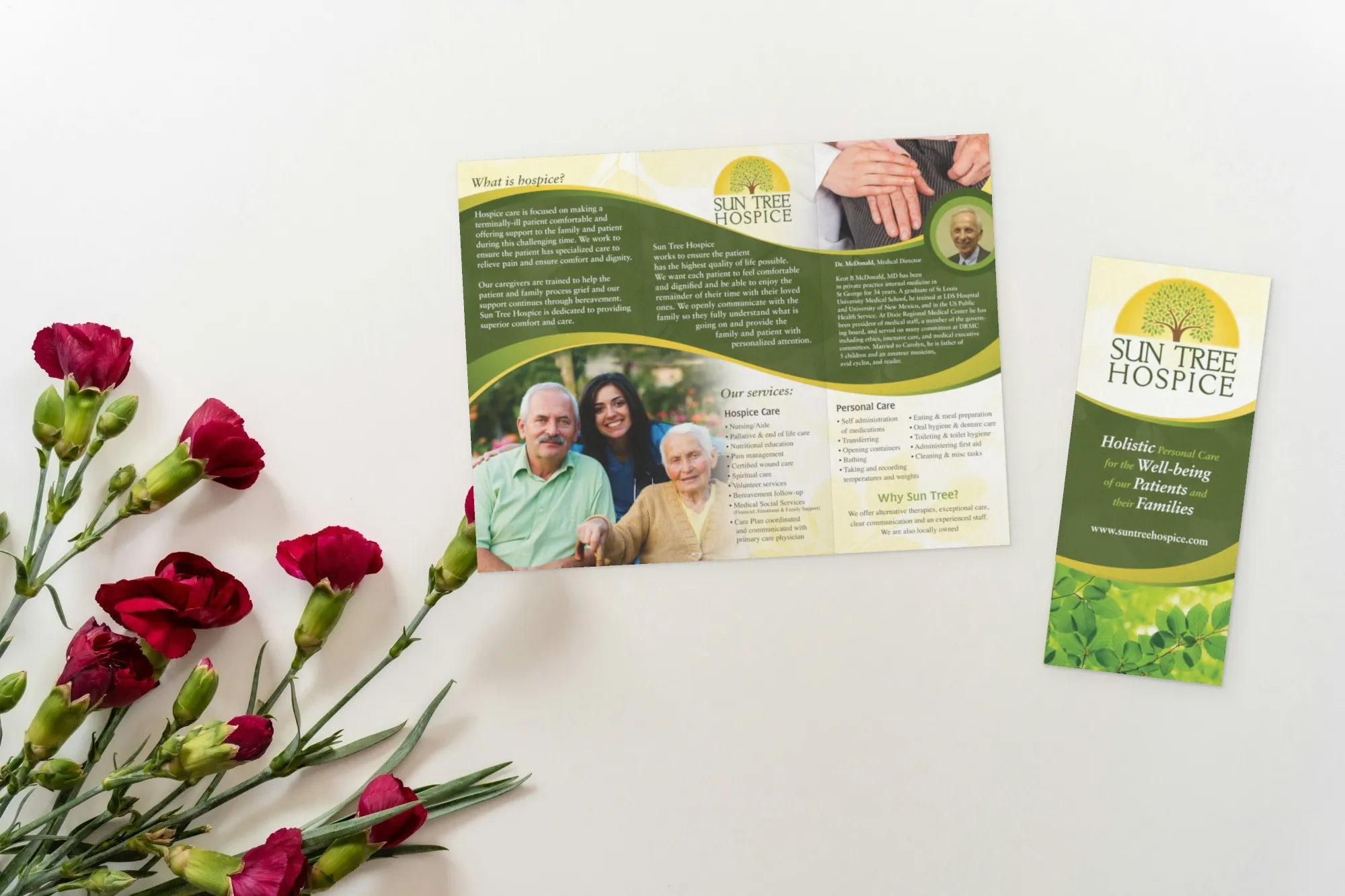
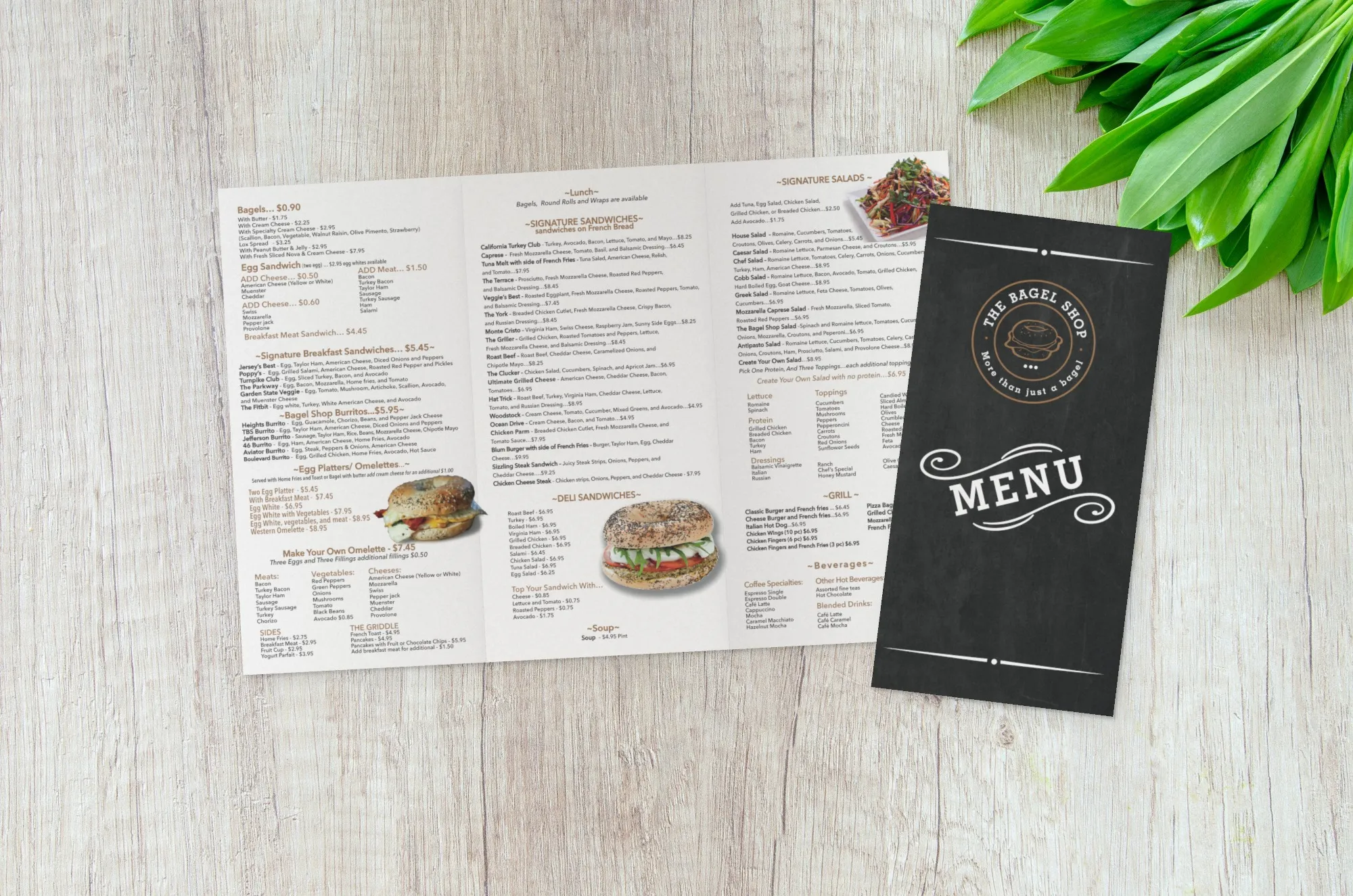
Brochures opened by fold — bi-fold, tri-fold, z-fold, or another fold you ask us to confirm — proofed as a flat sheet.

A folded sheet that explains one offer
A brochure earns its place when a single flat flyer is too small and a bound catalog is too much. It walks someone through a service, a place, or a product line in panels they can open in order. Agencies send it as a leave-behind. Clinics use it to explain a program. A company uses it when a prospect should be able to reread the offer after the meeting.
The fold is the product. A bi-fold is a simple open. A tri-fold is the rack piece people mean when they say “brochure” and stop there. A z-fold reads differently because the panels do not tuck the same way. If what you have is really a stack of pages, look at catalogs and booklets. If it is one unfolded announcement, it is a flyer.
Folds, panels, and paper
Tell us the fold, the finished closed size, and the flat size that fold implies. Bi-fold, tri-fold, and z-fold are the requests to name first. A gate fold or an accordion is welcome as a question on the quote; we confirm that we can build it before you finish the art. Panel order matters in the file: the cover, the flaps, and the spread someone sees only when it is fully open.
Most brochures are a single sheet, the same stock on every panel. Say how heavy that sheet should feel, and pick a finish: matte, gloss, or soft-touch. Matte is easier to read under office light. Gloss favors photography. If you truly need a heavier cover bound to lighter pages, say so — that construction is a booklet, and quoting it as a folded sheet will not produce it.
A short run, or a brochure that changes by offer, fits digital printing. A long identical run, where color has to stay even, is why people use offset printing. You bring the quantity and the number of versions. The quote assigns the process.
Quote, then a proof of the flat sheet
Request a quote with the fold, closed size, quantity, stock, finish, and the state or ZIP for delivery. If it must work as a self-mailer — a panel kept clear, a closure, no envelope — say that at the start. We price the print. Mailing the finished pieces onward, if you want that, is confirmed separately and is not assumed.
You get a proof of the flat sheet and of how it folds, and the job prints after you approve it. We then ship anywhere in the United States. If cartons need to go to more than one office, list the split with the quote so packing matches the plan.
Design the sheet lying open
A mockup of the closed cover is not a print file. Build the PDF to the flat size, with bleed past the outer cut, and keep type out of the folds. Folds crack heavy ink and swallow words that sit on the crease. Panel margins should hold up when the piece is closed, not only when it is spread on a desk. Export a PDF with the panels in press order, and note which face is out.
If the file is a series of slides or a flattened JPEG, graphic design and prepress can rebuild it to the flat size, set the panel order, and check bleed and type before you approve a proof. Send the copy in reading order, the photos you want used, and the fold, so the proof matches the piece you mean to buy.
Frequently asked questions
- Which folds can I ask for?
- Name bi-fold, tri-fold, or z-fold first. A gate fold or an accordion is a further request. Put it on the quote and we will confirm that fold before you send final art.
- Is the cover a heavier sheet than the inside?
- Only if you want it to be. A brochure is often one sheet, the same stock throughout. A separate heavier cover is closer to a booklet, so say so if that is what you need.
- Can a brochure mail without an envelope?
- A self-mailer needs a fold, a panel left clear, and a closure. Ask for it on the quote. We print the piece either way. Mailing it onward is confirmed separately.
- What do you need in the file to proof a brochure?
- The flat size, the fold, and a PDF built to that flat size. A picture of the closed cover is not enough to proof the panels.
By industry: Print for dental and medical practices
Related services
- Offset Printing
High-volume brochures, catalogs and flyers with sharp, consistent color at scale.
- Digital Printing
Short runs with no plates, from business cards to personalized mailers and proofs.
- Graphic Design & Prepress
Press-ready file prep and design support so your job prints right the first time.
Need brochures?
Tell us the piece and how many you need. The quote is free, and nothing prints until you approve the proof.